
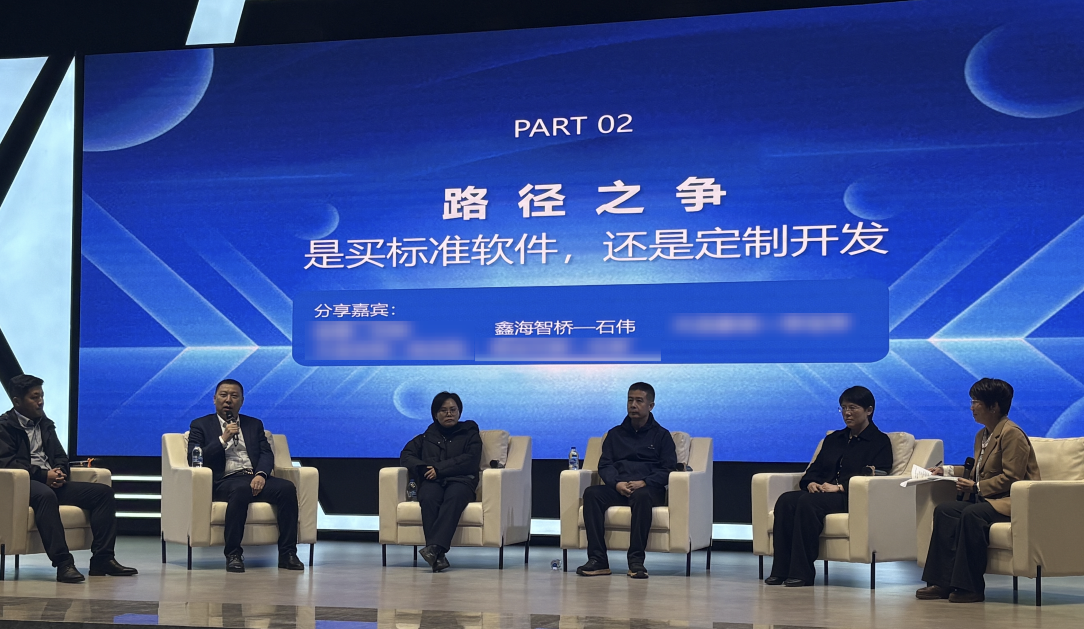
On the path of digital transformation in manufacturing enterprises, "Should we buy standard software or choose customized development?" is a key decision that almost all enterprises will encounter. As a local enterprise that has been deeply involved in the manufacturing industry for over 20 years, Wei Shi, Chairman of ZQSOFT, has faced this problem almost every day during his long-term service to manufacturing enterprises in Dalian and even across the country.
Chairman Wei Shi believes that this is not a simple choice between two, but a double-edged sword that needs to be used carefully - the key is not which one to choose, but whether it truly matches the business characteristics of the enterprise itself.

1. Customized development: theoretically perfect, but in reality it may "drag down" the enterprise
Wei Shi pointed out that 100% customized development may seem to fit every process of the enterprise, but in reality, it will bring two major challenges:
Long implementation cycle and high initial investment;
System stability requires long-term adaptation and verification.
He shared a typical case: a heavy equipment manufacturing enterprise once introduced a standardized MES system that was very mature in the field of automotive vehicles, but soon became "out of place". This system cannot adapt to the special mode of "designing, producing, and modifying at the same time" in enterprises, and it is also difficult to support the unique material and schedule management requirements of project manufacturing. The result is that standard functions are idle, and personalized functions are even more difficult to use.
The root of the problem lies in the fact that standard software carries standardized management logic, but the 'unique process' of specialized and innovative enterprises is its competitiveness and cannot be simply standardized, "said Wei Shi.
2. How to choose? Wei Shi provides a "practical" judgment logic
Chairman Wei Shi believes that companies do not need to struggle between "standards" and "customization", but should make precise decisions based on their own situation:
① The core process is highly differentiated → priority is given to customized development
If a company's competitiveness is reflected in unique craftsmanship and processes, just like a "person with a special body type buying clothes", and all ready to wear clothes on the market are not suitable, then customized development is a necessary investment.
② Most processes are universal → Standard software+localized customization for higher cost-effectiveness
If a company only has personalized needs in certain aspects, it's like signing the hem of pants to fit - standard platforms combined with a small amount of customization are low-cost and low-risk choices.
3. Practice of ZQSOFT: stability of standard platform+flexible customized fit
In the process of serving numerous manufacturing enterprises,ZQSOFT has developed a mature methodology:
Standard platform+industry module+flexible configuration
Standardized MES platform → Ensure system stability, reliability, and scalability
Industry module precipitation → adaptation to the domain characteristics of different manufacturing industries
Configurable capability → Quickly meet personalized needs such as quality inspection, production line, and order tracking like "signing pants legs"
This model allows enterprises to achieve both the maturity of standard software and the flexibility of their core processes, achieving a balance between "stability" and "specialization".
4. Conclusion: Digitization is not blindly chasing new trends, but choosing the right methods
Chairman Wei Shi emphasized:
Enterprises need to first determine whether their core processes have uniqueness, and then decide whether to use standard platforms as a foundation or combine precision customization to enhance competitiveness.
Digitization is not about piling up functions, but about finding ways that suit oneself to achieve robust, efficient, and sustainable growth.



👇🏻 Click on the link below to jump to:
ZQSOFT - Industrial Internet digital management platform ZQ-EOS product platform Get the Free Plan


1883D6D19D79454E9B3FA44C8F7F50F7.png)